Introduction
In the world of modern technology, where precision and protection go hand in hand, epoxy systems have become the backbone of electrical and electronic applications. Whether you are designing transformers, coating circuit boards, or insulating power equipment, epoxy ensures reliability, insulation, and long-lasting performance.
Behind every strong epoxy formulation lies the power of curing agents, which transform liquid resin into a solid, high-performance material that resists heat, moisture, and chemical stress. Together, epoxy and curing agents create materials that are not only durable but essential for protecting electrical and electronic components in harsh conditions.
Understanding Epoxy Systems
Epoxy systems are built on a simple but powerful chemistry: when epoxy resin combines with a curing agent, a cross-linking reaction occurs, forming a tough, thermoset polymer. This transformation provides unmatched strength, adhesion, and insulation properties.
These systems are extensively used in electrical insulation chemicals, coatings, and composite manufacturing because they offer high dielectric strength and resistance to temperature variations. For manufacturers and engineers, especially in industrial hubs like Ahmedabad, working with a trusted epoxy supplier in Ahmedabad ensures consistency, performance, and safety.
Role of Curing Agents
Curing agents—also known as hardeners—are what make epoxy systems come alive. They control how fast the resin sets, how flexible it remains, and how resistant it becomes to heat and chemicals.
Different curing agents are used for specific applications:
- Amines for fast-curing and high-temperature resistance
- Anhydrides for superior electrical insulation
- Polyamides for flexible and moisture-resistant coatings
In electrical and electronic applications, curing agents help epoxy achieve the mechanical strength and thermal endurance needed to protect sensitive equipment like transformers, sensors, and insulators.
Epoxy Systems in Electrical and Electronic Industries
The electrical and electronic industries rely heavily on epoxy because it acts as both a protector and performance enhancer. These systems are used for coating, encapsulating, and bonding components that must operate in extreme conditions.
Epoxy plays a crucial role in:
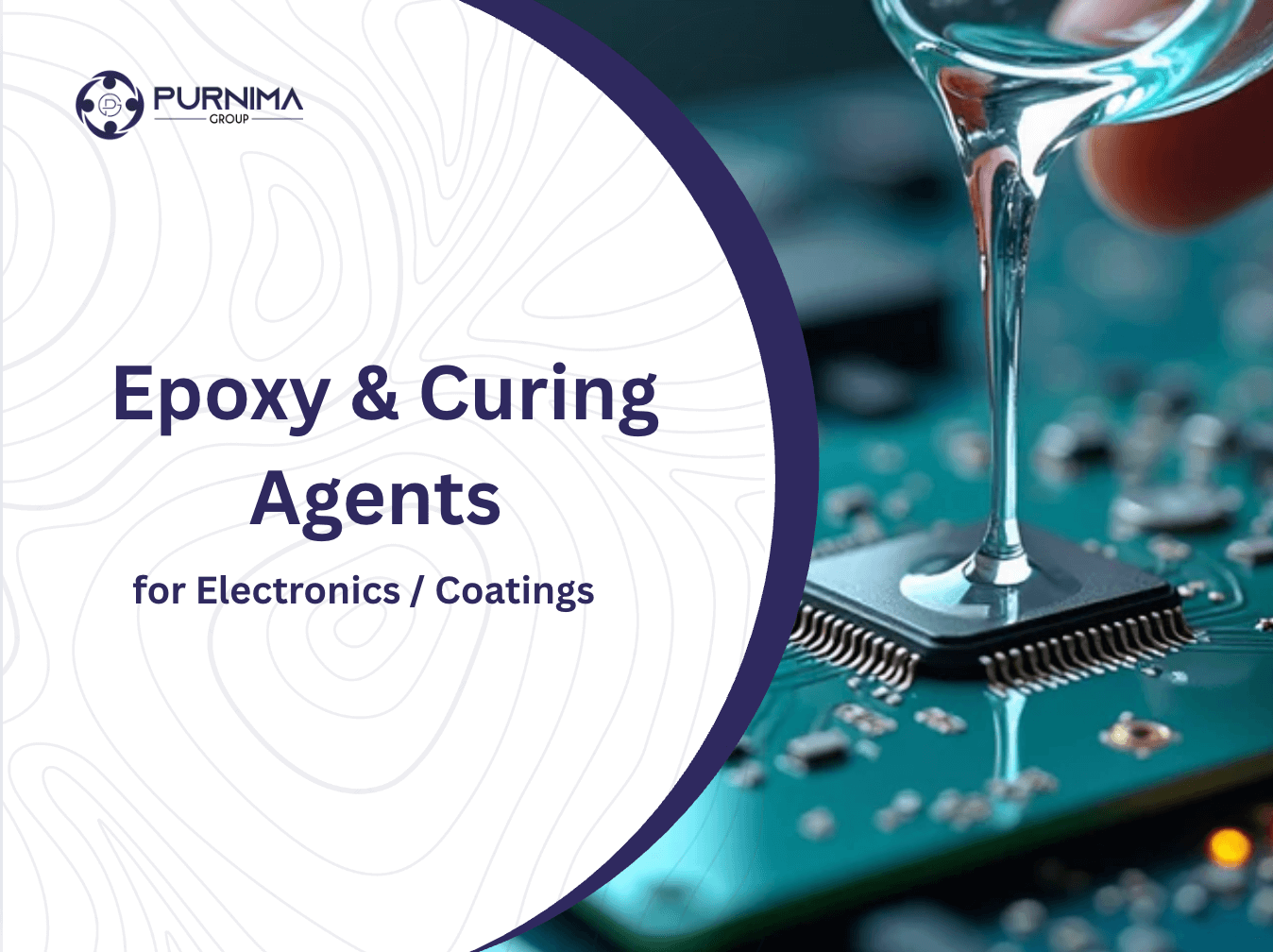
- Encapsulation and potting: Protecting circuit boards and transformers from moisture and dust.
- Surface coatings: Offering corrosion resistance for electrical housings and machinery.
- Insulation layers: Preventing electrical arcing and leakage in high-voltage applications.
What makes epoxy so reliable is its excellent dielectric properties—it resists electrical current flow while maintaining mechanical integrity. This ensures devices run smoothly without interference or breakdown.
In fact, electronic resin systems based on epoxy are the preferred choice for encapsulating sensors and semiconductors because they offer superior adhesion, resistance to vibration, and excellent dimensional stability.
For companies in Ahmedabad, where industrial innovation is growing, working with an electric insulation chemical manufacturer in Ahmedabad such as Purnima Group ensures access to advanced resin systems designed for precise electrical performance.
Pultrusion and FRP Applications
Pultrusion and FRP (Fiber Reinforced Plastic) manufacturing are among the most advanced uses of epoxy systems. Pultrusion is a continuous process that produces high-strength composite profiles like rods, tubes, beams, and structural supports.
Here’s how epoxy enhances this process:
- Superior fiber bonding: Epoxy perfectly wets and bonds to glass or carbon fibers, creating uniform, void-free composites.
- High thermal resistance: FRP components made with epoxy can withstand extreme temperatures without deformation.
- Dimensional stability: Epoxy ensures the finished product maintains its shape even under stress and varying temperatures.
These FRP components are widely used in industries such as power transmission, construction, and transportation because they combine light weight with incredible strength and insulation capacity.
Purnima Group, a trusted epoxy supplier in Ahmedabad, provides high-performance epoxy systems for pultrusion and FRP, tailored for industrial and electrical use. Their resins are engineered for consistent curing, low shrinkage, and long-term mechanical integrity—making them the preferred choice for composite manufacturers seeking both strength and reliability.
In applications where insulation and strength are equally important—like transformer supports, electrical rods, and industrial panels—epoxy-based FRP delivers superior results compared to polyester or vinyl ester alternatives.
Hot Cure Casting Systems for Electrical Insulation
Hot cure casting systems are the backbone of electrical insulation in high-voltage applications like Current Transformers (CTs), Potential Transformers (PTs), and insulators. These systems involve heating epoxy and curing agents at controlled temperatures to achieve dense, void-free insulation material.
Epoxy-based casting compounds offer:
- Excellent dielectric properties: They prevent current leakage and short circuits.
- Thermal endurance: They can tolerate high operating temperatures without degradation.
- Dimensional accuracy: Essential for components requiring precise electrical tolerance.
When combined with Electrical PU Adhesive, these systems provide outstanding adhesion and flexibility, ensuring that even under mechanical vibrations or temperature fluctuations, the insulation remains intact.
Purnima Group, a renowned electric insulation chemical manufacturer in Ahmedabad, specializes in hot cure casting systems for CTs, PTs, and insulators. Their formulations are designed to enhance productivity, minimize curing time, and improve overall thermal resistance—key for transformers and power distribution systems that run continuously under load.
Additionally, these advanced resin systems reduce the risk of void formation during casting, which is a common cause of electrical failure. By ensuring a perfectly filled and cured system, manufacturers can achieve insulation that performs reliably for decades.
Electrical Insulation Chemicals Explained
Electrical insulation chemicals form an invisible barrier that safeguards devices from unwanted current flow. They’re essential in preventing short circuits, electrical discharge, and overheating.
Epoxy-based insulation materials are preferred because they:
- Maintain high dielectric strength even at high voltages.
- Offer excellent thermal conductivity, preventing overheating.
- Resist moisture and chemical exposure, ensuring longevity.
These features make them a top choice for companies producing electronic resin systems and electrical PU adhesives in India and abroad.
Applications of Electronic Resin Systems
Epoxy and resin systems are used in almost every electrical component around us:
- Transformers and insulators: To protect windings and cores from moisture.
- Sensors and modules: For stability under temperature fluctuations.
- Circuit boards: Providing mechanical protection and insulation.
- Connectors and terminals: To prevent corrosion and leakage.
Their versatility, coupled with strong adhesion, makes them indispensable in both consumer electronics and heavy industrial equipment.
Purnima Group – A Leading Epoxy Manufacturer
Purnima Group stands at the forefront of electronic resin systems and electrical insulation chemical manufacturing in Ahmedabad. The company offers a wide range of epoxy solutions for pultrusion, FRP, hot cure casting, and coating applications.
Their innovations in Electrical PU Adhesives and epoxy formulations help clients achieve better performance, faster curing, and longer life in electrical assemblies. Purnima Group’s advanced R&D ensures each batch meets stringent electrical, mechanical, and environmental standards.
Innovation in Electrical PU Adhesives
The demand for high-performance Electrical PU Adhesive is increasing as industries push for stronger and lighter materials. Purnima Group’s adhesives are designed for superior flexibility and bonding, even in high-temperature and high-voltage environments. These adhesives ensure long-lasting protection in transformers, cable joints, and power control units.
Environmental and Safety Standards
Sustainability is now a major priority in the chemical industry. Modern epoxy suppliers in Ahmedabad are adopting eco-friendly formulations with low volatile organic compounds (VOCs) and improved biodegradability. Purnima Group ensures that every product aligns with international environmental and safety standards, ensuring safe use and minimal ecological impact.
Quality Control and Testing
Each batch of epoxy and insulation chemicals goes through rigorous quality control. Tests for dielectric strength, hardness, viscosity, curing time, and thermal expansion ensure reliability under all conditions. Such strict monitoring helps guarantee consistent performance for industrial and electrical applications.
Global Demand and Market Trends
The global market for epoxy resins and curing agents is booming due to growing demand in renewable energy, electric vehicles, and smart electronics. India, especially Ahmedabad, is becoming a hub for epoxy and electrical insulation chemical manufacturing. Purnima Group’s world-class production capabilities place them among the top contributors to this expanding sector.
Choosing the Right Epoxy for Your Application
Selecting the right epoxy system depends on several factors:
- Operating environment and temperature range
- Electrical load requirements
- Desired curing time and viscosity
- Compatibility with other materials
A consultation with experts at Purnima Group can help customers find the ideal epoxy formulation for maximum performance and durability.
Conclusion
Epoxy and curing agents have transformed the way the electrical and electronic industries operate. From pultrusion and FRP systems to hot cure casting applications for CTs and PTs, these materials offer insulation, protection, and mechanical strength that last for years.
When reliability, performance, and quality matter most, choosing a trusted epoxy supplier in Ahmedabad like Purnima Group ensures that every project benefits from advanced technology, consistent quality, and expert support.
FAQs
1. What is the main purpose of using epoxy in electronics?
Epoxy protects sensitive components from heat, moisture, and corrosion while offering insulation and mechanical support.
2. How do curing agents improve epoxy performance?
Curing agents trigger the chemical reaction that hardens epoxy, making it resistant to heat, chemicals, and mechanical stress.
3. What industries rely most on electrical insulation chemicals?
Power generation, electronics manufacturing, and telecommunications industries depend heavily on these chemicals.
4. Why are electronic resin systems preferred over traditional adhesives?
They provide better thermal stability, dielectric strength, and moisture resistance—ideal for precision electronics.
5. Where can I find the best epoxy supplier in Ahmedabad?
Purnima Group is one of the leading epoxy suppliers in Ahmedabad, offering customized solutions for electrical and industrial applications.